Asset Management

Optimizing property performance. Managing risk.

Taking Oversight to Another Level

We do the work, so you don’t have to.

Oversight of Property Management

Monthly Operating Reviews

Quarterly Property Inspections

Annual Budgeting

Capital Reserve Planning

Cash Management

Loan and Insurance Compliance

Crisis Management


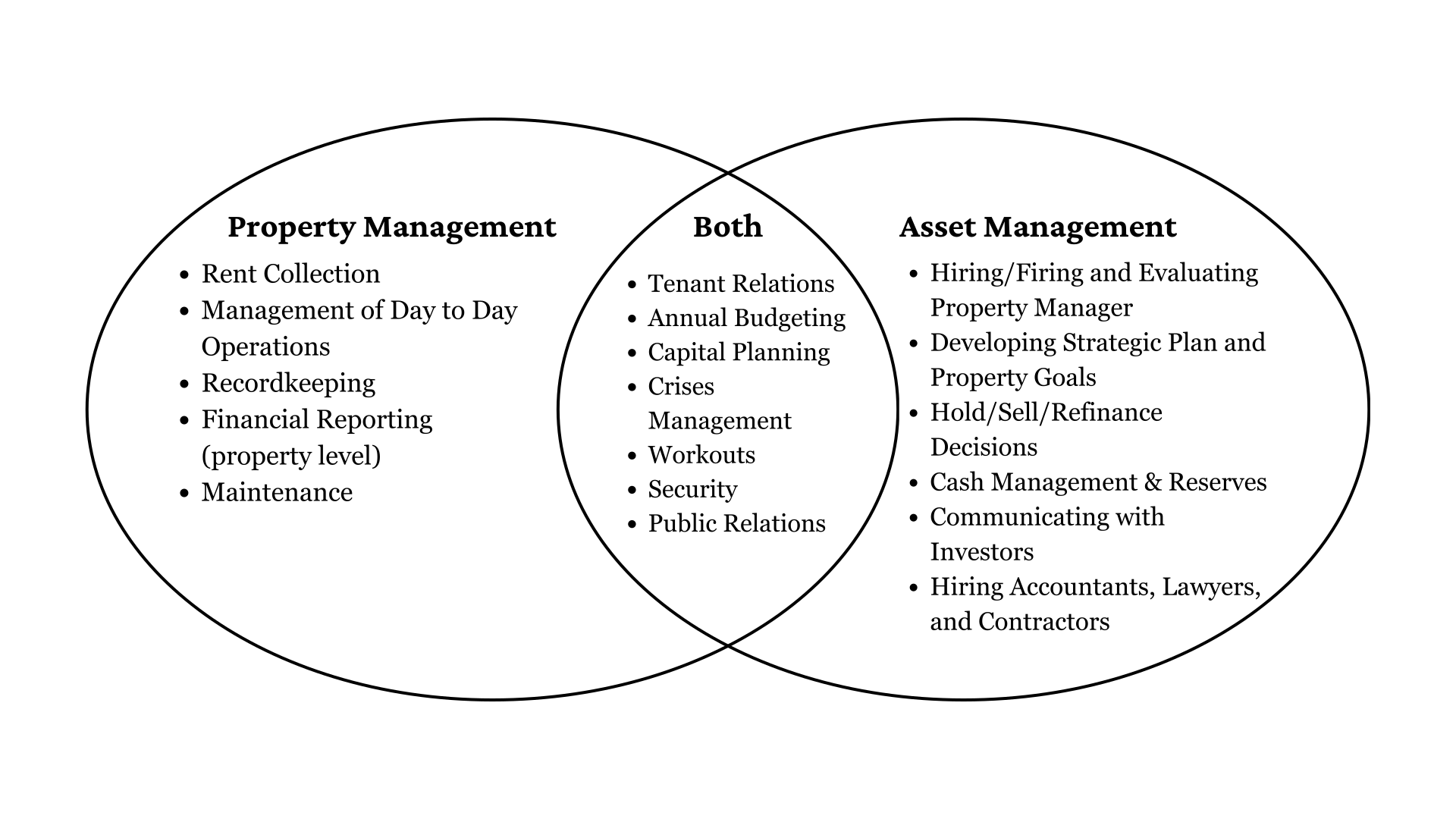
Property Management vs. Asset Management

FAQ

The strategic plan details the goals for the property and how to achieve them.

9 components make up Corto Realty Group’s strategic plan:

  1. Initial Investment Pro Forma
  2. 20-Year Operating Budget Projection
  3. Capital Finance Plan
  4. Refinance Plan
  5. Monitoring Plan
  6. Benchmarking Plan with Risk Ranking
  7. Capital Needs Projections
  8. Preventative Maintenance Plan
  9. Disaster Response Plan

Capital reserves are the funds set aside for repairs and improvements to the property that are too expensive to include in the operating budget.

Example: A roof replacement would be considered a capital expenditure. This improvement is expensive and occurs infrequently, so funds are set aside over time to cover the expense.

Operating reserves are funds set aside to cover unanticipated increases in operating expenses or shortfalls in income.

Example: Insurance premium renewals increased 20% from the prior year while the projected increase was only anticipated to be 2%. Operating reserves would cover the shortfall from the unanticipated rise in insurance premiums.

Benchmarking is the process of comparing a property’s performance against objective measures in the market. The asset manager uses benchmarking to assess management effectiveness.

Imagine a carpenter building a fence across a level field. The carpenter has a pile of boards approximately the same length. Before installing the boards, the carpenter checks the length of each board against a mark on his workbench to ensure the boards fall within an acceptable tolerance. This is benchmarking.

Ex: Market occupancy is 95% while your property’s occupancy is 88%. The objective measure is the 95% market occupancy that an asset manager measures the property against. In this case, the property appears to be operating below the market.

The asset manager would work with the property manager to determine the cause of below-market occupancy and devise a strategy to increase occupancy. 
Complete the contact form or send an email directly to dan@cortorealty.com. We will reach out within 24 hours to schedule an introductory call.

Please include the property address in the contact form.

All Services

1031 Exchange
1031 Exchange
Acquisitions
Acquisitions
Dispositions
Dispositions
Asset Management